Tracing the Journey of Artificial Intelligence: From Early Beginnings to Modern-Day Innovations
Artificial intelligence (AI) has the power to revolutionize numerous aspects of our lives and is constantly advancing. From self-driving vehicles to language translation, the scope of AI is vast and its impact is already evident in many areas. AI has the ability to transform the way we live and work, with applications ranging from improving business efficiency to assisting in scientific research. As we move into the future, it is likely that AI will continue to play a significant role in shaping our world.
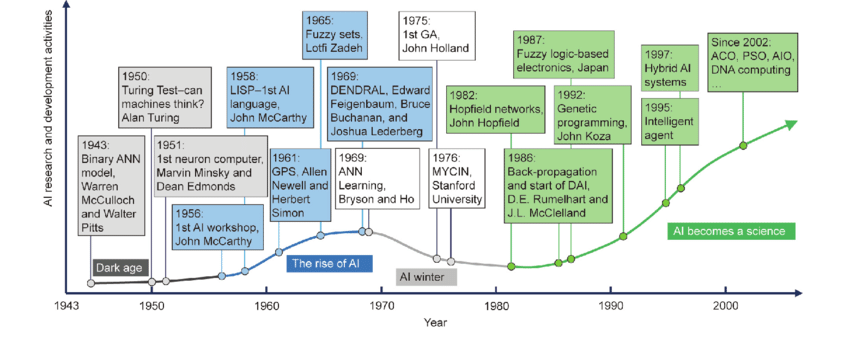
The field of artificial intelligence (AI) has a long and storied history, with roots dating back to the 1950s. At this time, researchers began working on projects that aimed to create machines that could exhibit human-like intelligence and perform tasks such as learning and problem-solving. Over the years, AI has made tremendous strides and has become an integral part of many technologies that we use on a daily basis. As AI continues to evolve, it is likely that we will see even more impressive and transformative developments in the future.
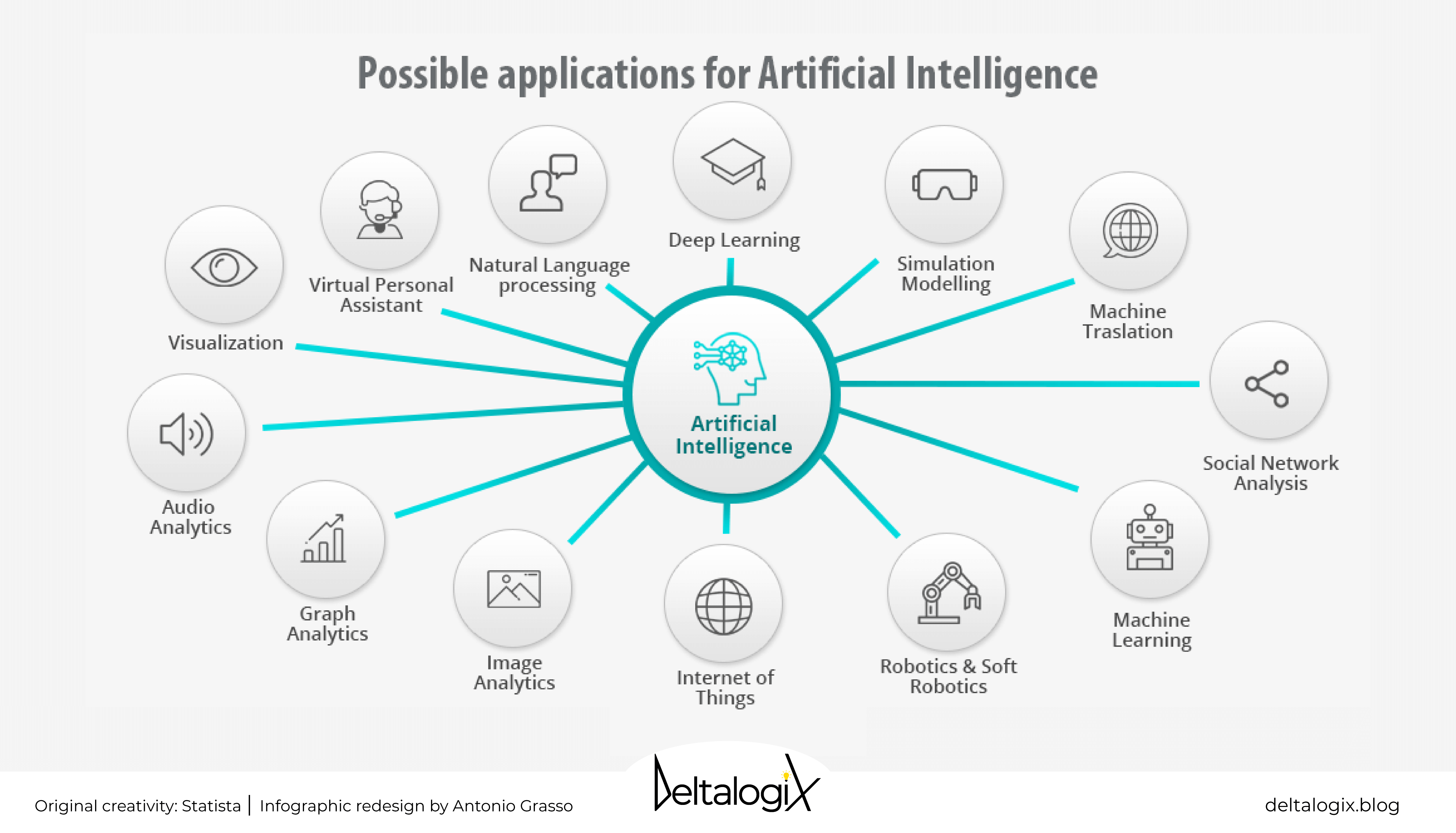
Artificial intelligence (AI) is being used in a wide range of applications today, with many of these applications aimed at improving efficiency and convenience. Some examples of how AI is being used in the present include:
- Image and speech recognition: AI algorithms can be used to analyze and interpret images and spoken words, enabling tasks such as facial recognition and voice-to-text transcription.
- Language translation: AI-powered translation tools can quickly and accurately translate text and speech from one language to another, making it easier for people to communicate with one another regardless of their native language.
- Decision-making: AI systems can be trained to analyze large amounts of data and make informed decisions based on that data. This can be useful in a variety of contexts, such as in finance and healthcare.
In addition to being used by businesses to improve efficiency and productivity, AI is also being employed by researchers to better understand the world around us. For example, AI algorithms can be used to analyze and interpret data from scientific experiments, helping researchers to draw more accurate conclusions. Finally, AI is also being used by individuals to make their lives easier and more convenient. Smart assistants, for instance, can perform a wide range of tasks for us, from setting reminders to making restaurant reservations.
It is difficult to predict exactly what the future will hold for artificial intelligence (AI). Some experts believe that we will continue to see significant progress in the field, with AI becoming increasingly integrated into our daily lives. This could include the development of virtual assistants that are able to handle a wide range of tasks for us, such as scheduling appointments and managing our calendars.
Intelligent systems that can analyze vast amounts of data could also become more prevalent, allowing us to uncover new insights and make better decisions. For example, AI algorithms could be used to analyze data from scientific experiments, helping researchers to make more accurate predictions and draw more robust conclusions. In business, AI could be used to analyze market trends and customer data to make more informed decisions about how to allocate resources and optimize operations.
In addition to these practical applications, it is also possible that we will see the development of more advanced AI systems that are able to perform tasks that currently require human intelligence, such as creative problem-solving or complex decision-making. As AI continues to evolve, it will be interesting to see what new and innovative uses for the technology emerge.
While the development of artificial intelligence (AI) has the potential to bring many benefits, there are also potential risks and challenges that need to be carefully considered. Some points supporting the concern about AI-related job displacement include:
- Automation: As AI technologies become more advanced, they are able to take over tasks that were previously done by humans. This could result in job displacement, particularly in industries where tasks are repetitive or routine in nature.
- Economic impacts: Job displacement caused by AI could have significant economic consequences, such as reduced demand for labor and reduced income for workers who lose their jobs.
- Social impacts: The loss of jobs due to AI could also have social impacts, such as increased inequality and social unrest.
- Need for proactive measures: Given the potential risks and challenges associated with AI-related job displacement, it will be important for governments, businesses, and other stakeholders to take proactive measures to address these issues as AI becomes more prevalent in the workplace.
There are also ethical concerns surrounding the development of AI. For example, there is the potential for bias to be built into machine learning algorithms, which could lead to unfair or discriminatory outcomes. Additionally, there is the possibility that AI could be used for nefarious purposes, such as developing autonomous weapons or enabling cyber attacks. Ensuring that AI is developed and used in an ethical and responsible manner will be crucial as the technology continues to advance.
As the field of artificial intelligence (AI) continues to evolve, it is clear that technology will play a significant role in shaping our world. While there are many potential benefits to the development of AI, it is important to carefully consider the potential risks and challenges as well. These could include issues such as job displacement and the ethical implications of AI, such as the potential for bias in machine learning algorithms or the possibility that the technology could be used for nefarious purposes. Moving forward, it will be crucial to ensure that AI is developed and used in a responsible and ethical manner, taking into account the potential risks and benefits of this powerful technology.